

Have you ever woken up from a dream and immediately searched “What does this symbol mean?”
A snake. Falling. Losing teeth. Being chased.
The internet is full of dream dictionaries confidently telling you what your dream means. But here’s the uncomfortable truth many people sense intuitively:
What if the symbol doesn’t mean the same thing for everyone?
Some dream symbols feel eerily universal, while others seem deeply personal—tied to memories, emotions, and experiences only you carry. So which is it?
We’ll explore how dream symbols work, why some meanings repeat across cultures, and why your personal story matters more than any generic interpretation.
What Are Dream Symbols, Really?
Dream symbols are images, people, objects, places, or actions that appear in dreams and represent something beyond their literal form.
Your brain doesn’t dream in words or logic.
It dreams in imagery, emotion, and metaphor.
Instead of saying “I feel overwhelmed”, your mind might show you:
- A wave crashing over you
- A collapsing building
- A never-ending staircase
Symbols are the language of the subconscious.
The Case for Universal Dream Symbols
Some dream symbols appear across cultures, time periods, and even in people who have never met or shared the same upbringing. This has led psychologists and researchers to believe that certain symbols may be universal.
Why Some Symbols Repeat Everywhere
- Shared Human Biology
All humans experience fear, attachment, loss, desire, and survival instincts. - Common Life Experiences
Birth, death, falling, being chased, danger, and safety are near-universal experiences. - The Brain’s Pattern-Making Nature
The mind uses familiar physical sensations (falling, running, hiding) to express emotional states.
Examples of Often-Shared Meanings
- Falling → loss of control, instability, fear of failure
- Being chased → avoidance, unresolved stress, anxiety
- Teeth falling out → vulnerability, insecurity, fear of judgment
- Flying → freedom, escape, empowerment
These interpretations don’t come from superstition—they come from repeated psychological patterns observed across thousands of dream reports.
But this is only half the story.
Why Dream Symbols Are Deeply Personal
Here’s where most dream interpretations go wrong.
Your subconscious doesn’t care about dream dictionaries.
It cares about your memories, emotions, and associations.
The Same Symbol Can Mean Opposite Things
Let’s take one symbol: a dog
- For someone who grew up with a loving pet → comfort, loyalty, protection
- For someone bitten as a child → fear, threat, danger
The symbol is the same.
The meaning is completely different.
Your brain pulls from your emotional history, not a universal rulebook.
How Personal Experience Shapes Symbol Meaning
Dream symbols are filtered through:
1. Emotional Memory
Your brain stores emotions more strongly than facts. If an object is emotionally charged in your life, it will carry weight in dreams.
2. Recent Experiences
Dreams often remix recent events—conversations, fears, stress, or unresolved thoughts.
3. Cultural Background
Even universal symbols are interpreted through cultural lenses. Water, death, animals, and authority figures vary widely in meaning depending on upbringing.
4. Current Mental State
The same symbol can mean different things at different points in your life.
A house dream during a breakup won’t mean the same thing as a house dream during a career change.
Universal vs Personal: It’s Not Either/Or

Here’s the most important insight:
Dream symbols are layered.
Think of them like this:
- Universal layer → shared human themes (fear, safety, loss, growth)
- Personal layer → your memories, trauma, beliefs, and current emotions
A dream symbol usually starts with a universal theme, then gets personalized by your subconscious.
Common Dream Symbols (and How to Interpret Them Personally)
Instead of asking “What does this symbol mean?”, ask:
“What does this symbol mean to me?”
Here are a few examples with a better approach:
Water
- Universal: emotions, the unconscious
- Personal questions to ask:
- Was the water calm or violent?
- Were you in control or overwhelmed?
- How do you personally feel about water?
Being Late or Lost
- Universal: anxiety, pressure, fear of missing out
- Personal layer:
- Are you feeling behind in life?
- Is there something you’re avoiding?
- Who else was present in the dream?
Houses
- Universal: the self, inner world
- Personal layer:
- Which room were you in?
- Was the house familiar or strange?
- What emotions did you feel inside it?
Emotion always matters more than the object.
Why Dream Dictionaries Can Be Misleading
Dream dictionaries aren’t useless—but they’re incomplete.
They:
- Offer starting points, not conclusions
- Work best for identifying themes, not answers
The danger comes when people:
- Ignore their emotional response
- Force meanings that don’t resonate
- Assume dreams predict the future
Dreams reflect your inner state—they don’t give fixed prophecies.
A Better Way to Understand Your Dream Symbols
Instead of searching for instant meanings, try this process:
1. Capture the Dream Quickly
Details fade fast. Write or record your dream as soon as you wake up.
2. Identify the Strongest Emotion
Fear? Confusion? Relief? Curiosity?
Emotion is the key to interpretation.
3. Ask Association Questions
- What does this symbol remind me of?
- Where have I felt this emotion recently?
- Does this symbol connect to someone or something in my waking life?
4. Look for Patterns Over Time
Recurring symbols matter more than one-off dreams.
This is where consistent dream journaling becomes powerful.
Why Tracking Your Own Symbols Matters More Than Google
Over time, your subconscious develops a personal symbolic language.
A bridge, a phone, a classroom—these may show up repeatedly with similar emotional tones. Recognizing your patterns leads to deeper self-understanding than any external interpretation ever could.
Dream journaling helps you:
- Spot recurring themes
- Understand emotional triggers
- Notice how symbols evolve as your life changes
Final Thoughts: So… Are Dream Symbols Universal or Personal?
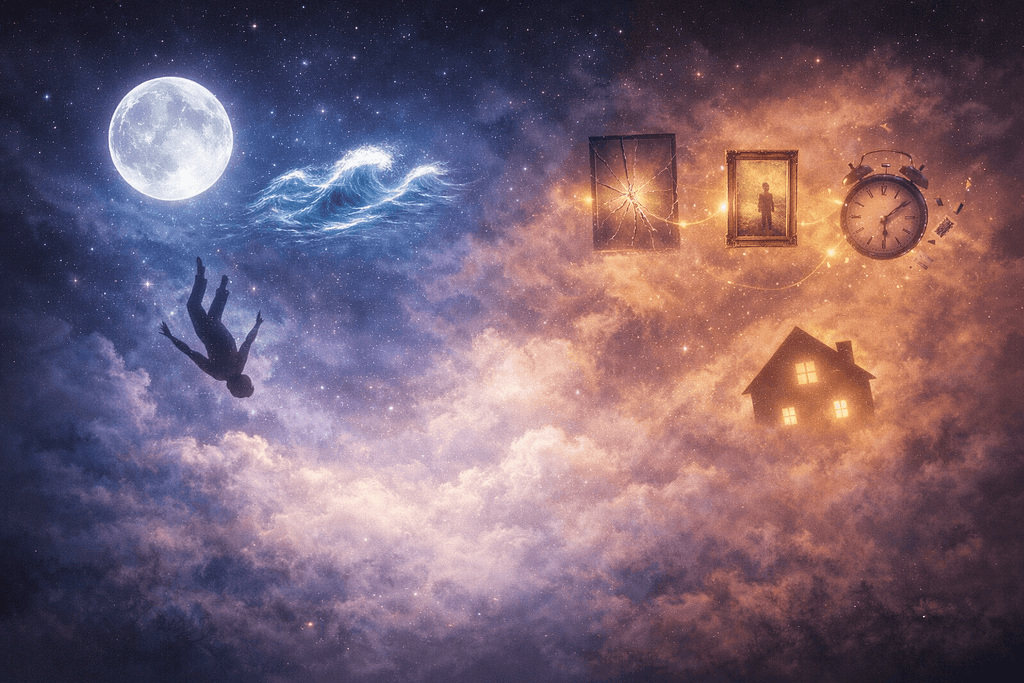
They’re both—but personal meaning always wins.
Universal symbols give structure.
Personal experience gives truth.
Your dreams aren’t puzzles to solve with a dictionary.
They’re conversations with your subconscious—spoken in a language only you can fully understand.
The more you listen, reflect, and track them, the clearer that language becomes.
And often, the dream isn’t asking you to decode a symbol at all—it’s asking you to notice how you feel.
Why Personalized Dream Interpretation Matters
If dream symbols are deeply personal, then interpretation should be personal too.
When you search online for a dream meaning, you’ll usually find general explanations — definitions designed to apply to everyone. While these can offer useful starting points, they rarely take into account your emotional state, life circumstances, or recurring patterns.
But as we’ve explored, context changes everything.
Dreaming about being chased isn’t just about “avoidance.”
It depends on who was chasing you, how you felt, and what’s happening in your waking life.
That’s why a more reflective approach can be far more meaningful.
Beyond Generic Definitions
Instead of relying on fixed interpretations, a structured dream journaling process allows you to:
- Notice recurring themes over time
- Track emotional patterns across multiple dreams
- Connect symbols to real-life situations
- See how meanings evolve as your life changes
Dream interpretation works best when it’s an ongoing exploration — not a one-time definition.
A More Thoughtful Way to Understand Your Dreams
Tools like DreamStory are built around this idea.
Rather than replacing your own reflection, they support it — helping you organize your dreams, identify emotional trends, and uncover patterns you might otherwise overlook.
The goal isn’t to tell you what your dream means.
It’s to help you discover what it might mean for you.
And that shift — from generic explanation to personal insight — is where deeper self-understanding begins.


